
My time at the Warner Textile Archive researching Hans and Isabel Tisdall
Louise Dickins, University of Essex
At the time of taking on this project, I was in the final term of my master’s in history, attending the University of Essex. I was given the exciting opportunity as part of my module ‘Archive and Power’ to have a practice-based output as my final piece of coursework opposed to the traditional essay. I jumped at the idea of this with excitement to do a short placement and work alongside an archive doing research and creating something practical and useful. I decided to choose the Warner Textile Archive. The prompt intrigued me as I find the more social aspect of researching specific persons and their biographies particularly interesting and also have an interest in textiles themselves. The local location of the archive was also convenient as it would mean accessibility to visit the archive.
I first had a meeting with the Archivist Sophie Jemma at the Warner Textile Archive at the end of March in which I gained a further insight into the archive and what research I would be doing. I was tasked with the research of Hans and Isabel Tisdall, and associated persons such as Marianne Straub, Ernst Aufseeser and the company Tamesa. All of these names are closely associated with each other, and one story cannot be told without the mention and involvement of the others. I was given some resources to get the ball rolling and we booked for me to visit the archive itself on the 9th of April.
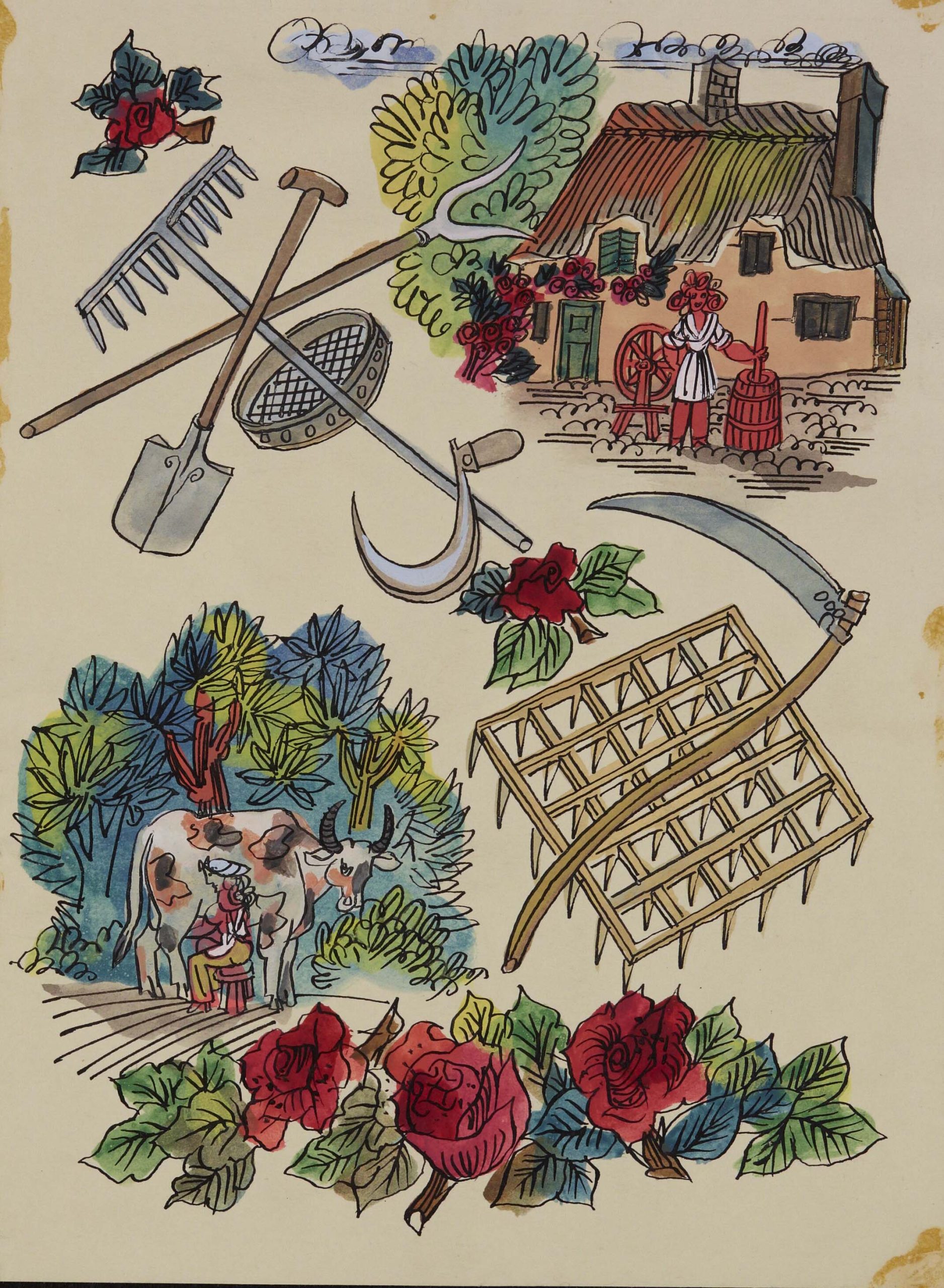
3753 ‘New Zealand’, hand-painted design by Hans Tisdall, c.1939 for Helios.
My visit to the archive was interesting and eye opening to the operation of archives and the responsibilities of those involved. The Warner Textile Archive had many friendly and highly knowledgeable volunteers helping with the archival process. The archive was very impressive with what it held, being located in one of the old textile mills. I was shown and told the history of the building and the company and also shown how the archive categorises and stores its pieces. Something I am particularly interested in – especially the preservation of the fabric pieces.
I then had a discussion and time to research more about the aforementioned persons and how the project was to be structured. I was lent three books, Mary Schoeser Marianne Straub, Jackson, Lesley (2007). Twentieth Century Pattern Design. Princeton Architectural Press. And ‘A choice of design 1850-1890 Fabric by Warner and sons limited’, in which I found much of my initial information such as relations, dates and textile pieces – although much of this came into relation to Marianne Straub opposed to my primary persons Isabel and Hans. An interesting discrepancy was the inclusion of Eva Tisdall – who has been credited with a piece of work at Warner & Sons which was simply signed ‘Aufseeser.’ This is interesting as Eva was recorded as not being particularly associated with art and graphic design like her father and brother. It is likely as well that the sources which credit Eva have also all come from the same source, opposed to a further research of other evidence – it is more likely that it could have been made as a tribute to Eva by her father – or was a piece in which Ernst or Hans were trying a new style, hence why it may not have been credited to their usual style of pieces?
After this I visited Braintree Museum which had an Art Deco exhibition at the time and a room dedicated to Warner & Sons history. Within this area of the museum, I found more key names and works particularly for Tamesa and Marianne Straub.
My next point of research was to review the documents that I had been sent which included a previous project about Hans. I read this document and reviewed the bibliography pieces to include in my own research. With this initial research I then took the names of those I was researching and checked if search engines had any information. It would unfortunately appear that there has not been much recent work on the persons, with the most informative pieces being the obituaries of Hans and Isabel. Similarly, the V&A, my university archive and many family sites did not appear to have many mentions or records either – this could likely be due to the foreign-born status of all persons, with the Aufseesers being born in Munich – Marianne Straub being Swiss born and Isabel being born in Italy.
All persons are uniquely prominent in and around the Second World War with Ernst Aufseeser participating in the 1928 Amsterdam Olympics and having to flee Germany in the 1930s due to the rise of the Nazi party. Similarly, Hans and Isabel both worked throughout the war in similar roles – with Isabel working for wartime Vogue and having an association with famous wartime photographer Lee Miller, and Hans using his illustrative skills for work within the Department of Information.
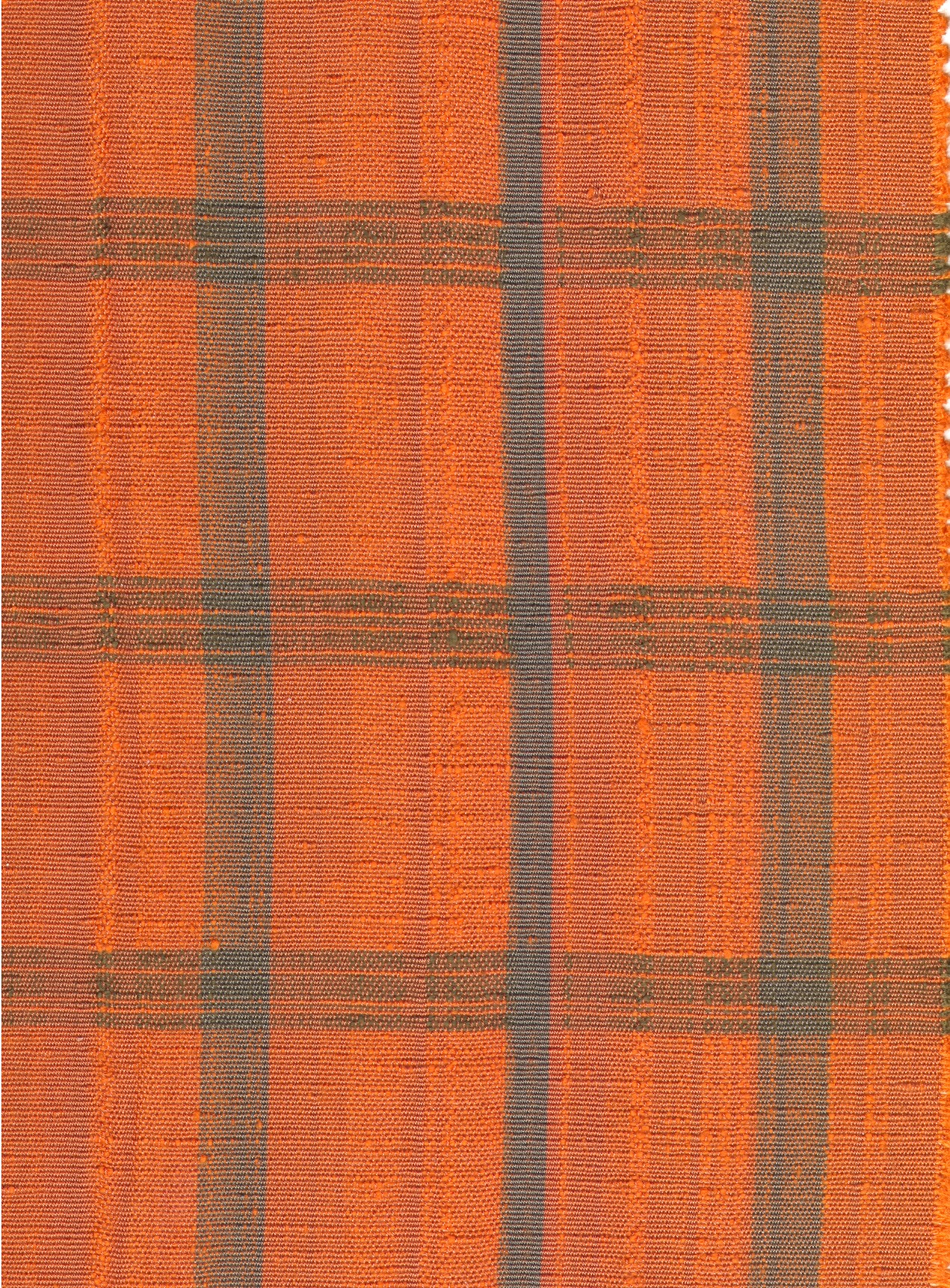
‘Checkmate’, powerwoven cotton damask, designed by Marianne Straub, and woven by Warner & Sons for Tamesa, 1969.
After the war Isabel set up her own company ‘Tamesa’ in 1964. She employed the works of her husband, and Marianne Straub for this company and had a unique way of operating the company, prioritising the brand name opposed to the commissioned artists. She was also reportedly incredibly involved in the company’s operations, viewing and approving collections before they were put out. She made a name for herself as having a distinct style of textiles and the company quickly grew and found numerous commissions.
We had a check in at the beginning of May in which I was given useful feedback for things that I could research further, such as the names of Hans and Isabel’s daughter, a few dates and places such as the artist colony in Switzerland that Hans went to. Unfortunately, most things regarding names and dates seemed inaccessible due to paywalls or possible response times – however I was interested to find out more about Elizabeth Arden and the artist colony on Monte Verità, which was apparently an alternative and naturalist hotspot in the first half of the 20th century.
Something I found interesting researching all of these persons was their obscurity and yet popularity. Whilst information on their personal lives was difficult to research, much of the work done by all of these people were easily viewable in day to day lives, with commissions for textiles for universities, libraries and public transportation. Something interesting I found as well was these persons seem to have somewhat escaped the typical diminishing and archival negligence faced by minorities – with the Aufseesers and Marianne Straub holding foreign immigrant status (although Hans and Eva’s mother was Anglo-Irish) and Straub and Isabel’s status as women. Whilst again not much is known about their personal lives, nor the specific dates for much of their timelines, where they were or relations. What has been well preserved are their works and contributions, perhaps because they were so boldly evident in day-to-day life? Particularly in the case of Marianne and Isabel who were formidable in their contributions to design and as businesswomen, with their work beginning as early as the 1930s it is interesting that in a time when independence for women and the decision to have a career was not seen as feminine – nor was it a social norm. These women have managed to still bring forth the interest and importance of their stories to archival history.
To conclude, I find the rebalancing of the content within the Warner Textile Archive to have been particularly interesting and important in the field of archival studies. So often are archives focused on the continuation and bias of preserving white, British, often male stories. However, that was not the research that I was tasked with. Researching these persons who had richly diverse backgrounds and life was both exciting and at times difficult. The lack of accessible resources highlights my previous point and made me want to work even harder to uncover their stories so that their legacies may be preserved. As a final statement, I am incredibly grateful for my experience at the Warner Textile Archive and all that I was able to learn from my time with them.