
Passementerie: mysterious decorative trimmings
Progress continues to be made on assessing significant areas of the dress and costume collection as part of the Museum Work Experience Grant funded by The Costume Society. Jess Flewitt moves forward with exploring the fragile passementerie within the collection.
Jess Flewitt, Museum Work Experience Grant
The dress and costume collection at the archive contains various pieces of historical passementerie, which are handmade trimmings used on furniture, interior or clothing. The pieces at the archive mostly use jet or black bead embroidery, or soutache and rouleaux braiding.
Firstly, I needed to assess what was present and locate all the pieces with any pairs. I also located the relating index cards to check information and accession numbers. The pieces needed to be mounted onto calico fabric to give support as some pieces are fragile. I used natural thread to mount the delicate pieces and attach new labels to the mounts.
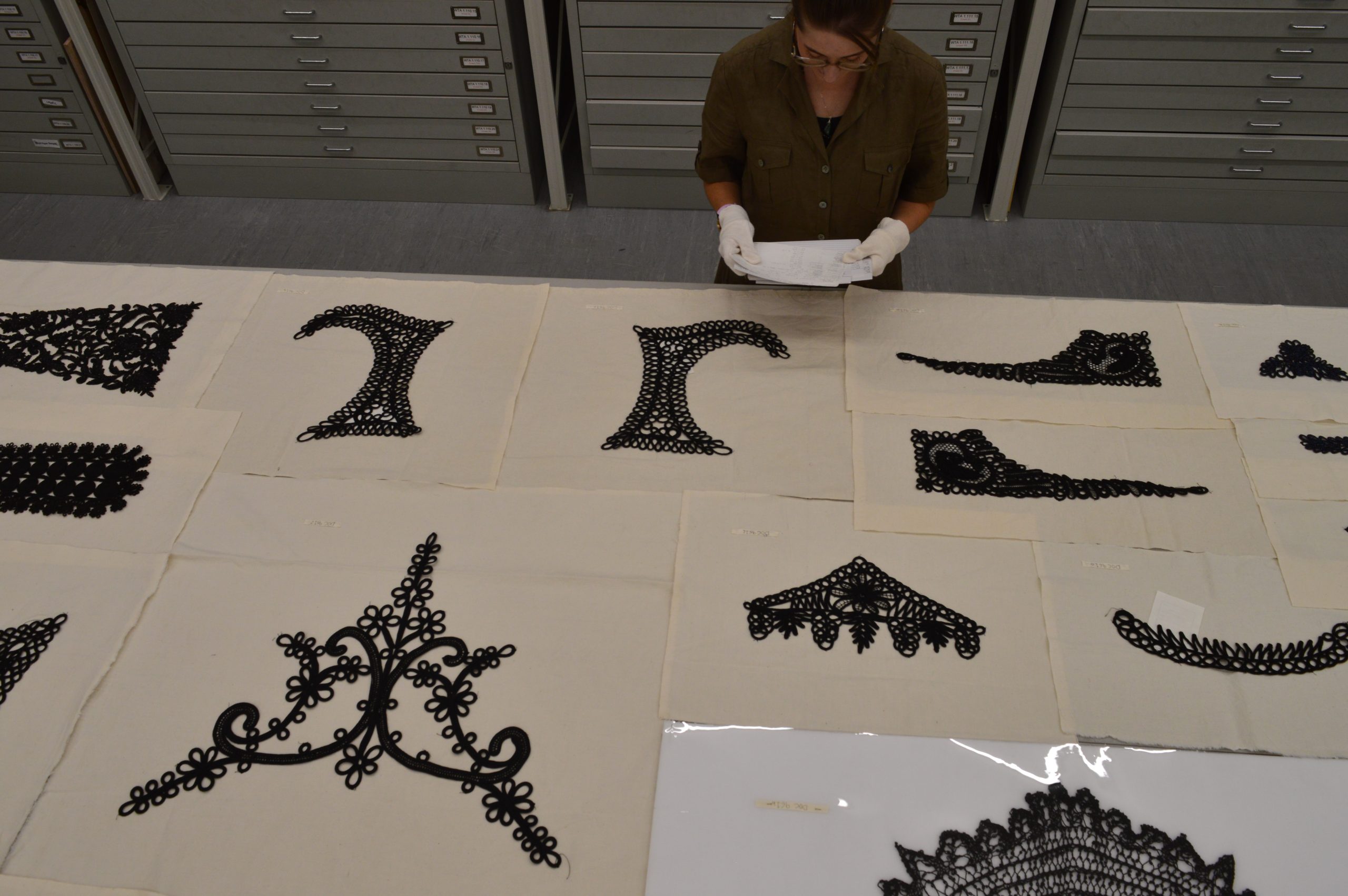
Jess assesses several pieces from the passementerie collection.
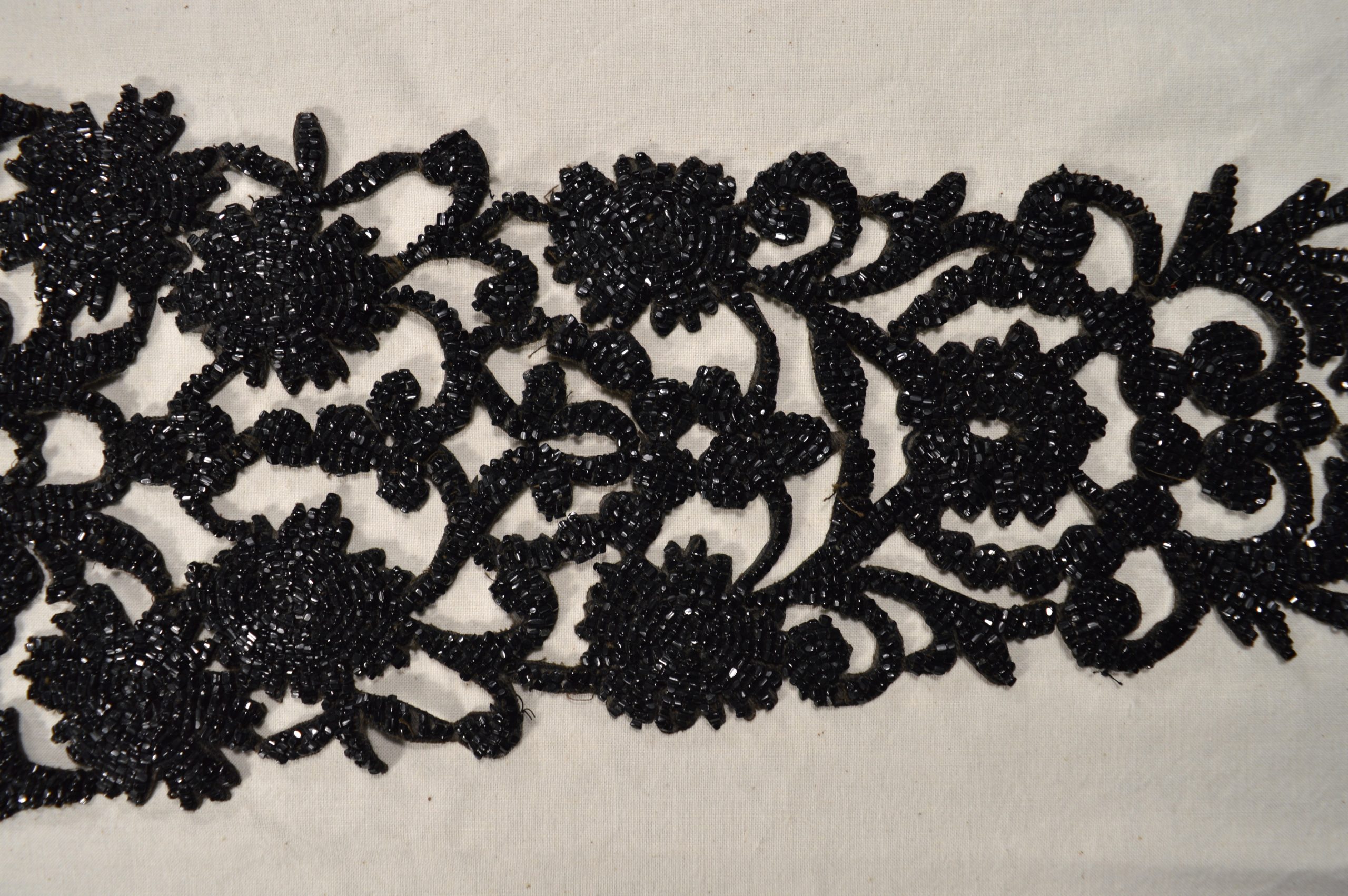
DOC 961g, Detail of Victorian floral passementerie made from jet beads on stiffened linen.
While mounting I also checked the measurements, accession numbers, descriptions, and the condition of the pieces. It is important to make sure information is up to date for index cards and online records. Before updating the archival records, detailed photographs needed to be taken of each piece for identification and condition analysis.
There is little known about the provenance of the passementerie pieces, but after researching I believe most of them to be Victorian dress trimmings. I came to this by examining the techniques and materials used, as well as the shape for intended use while comparing with historical examples and research references. The applique pieces would have been sewn onto capes and dresses to decorate and show wealth. Research shows that the skills may have been developed in Spitalfields passed down by French and Dutch Huguenots.
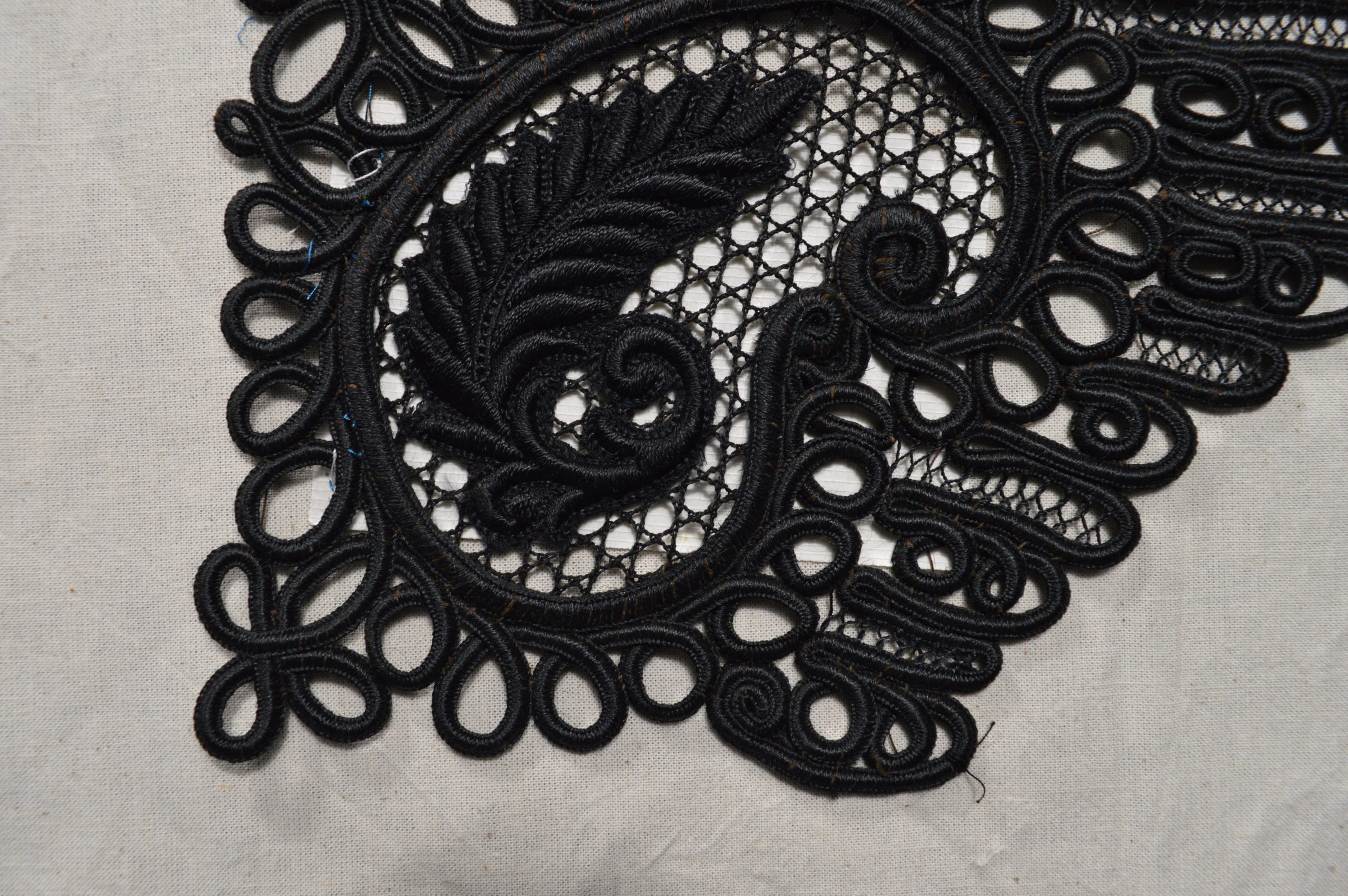
DOC 961k, Detail of Victorian passementerie made with Rouleaux technique and netting effect.